

EMSLIBS 2025 - Une édition stratégique au service de l'innovation scientifique et technologique
VERSION FRANÇAISE
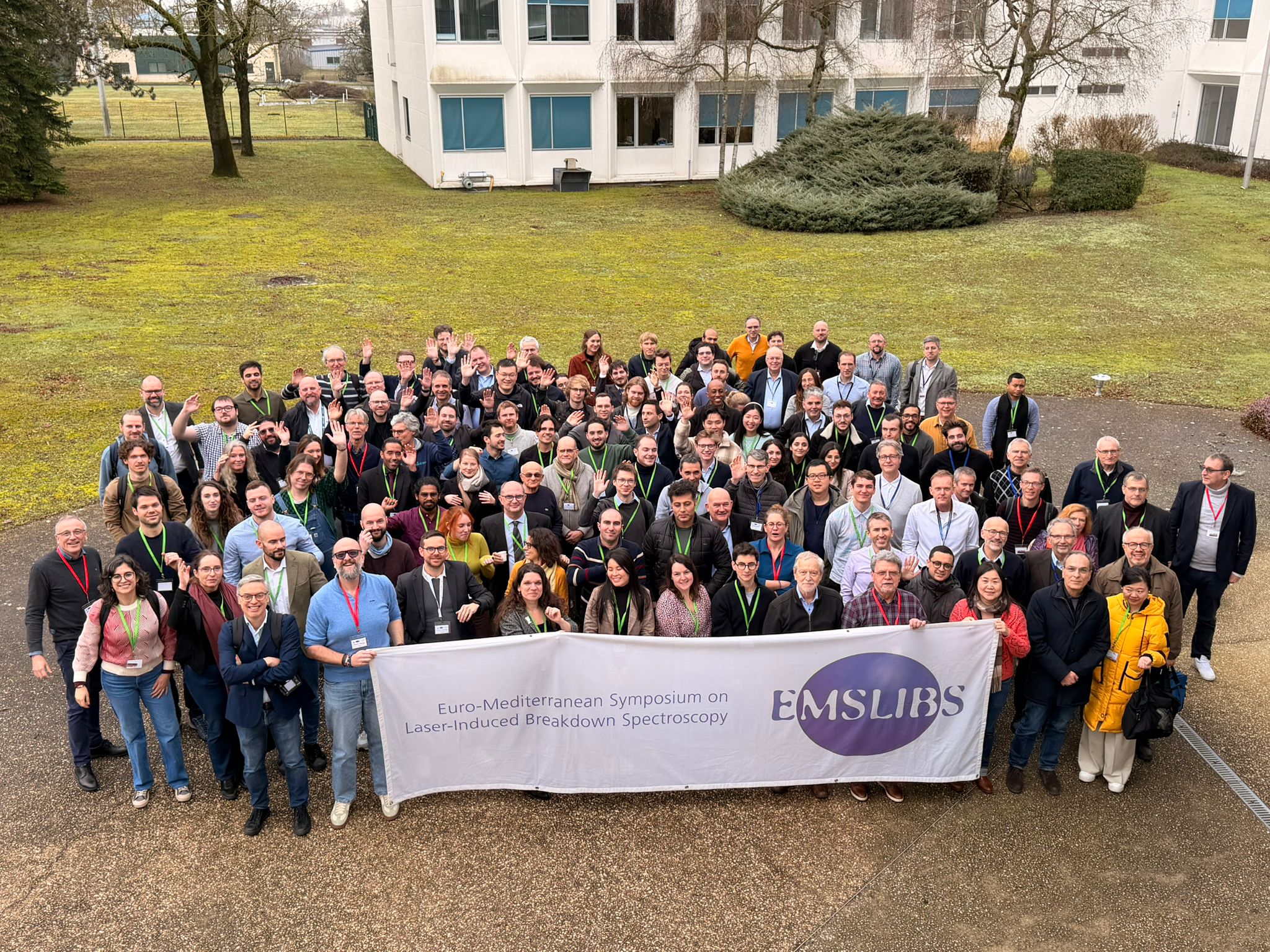
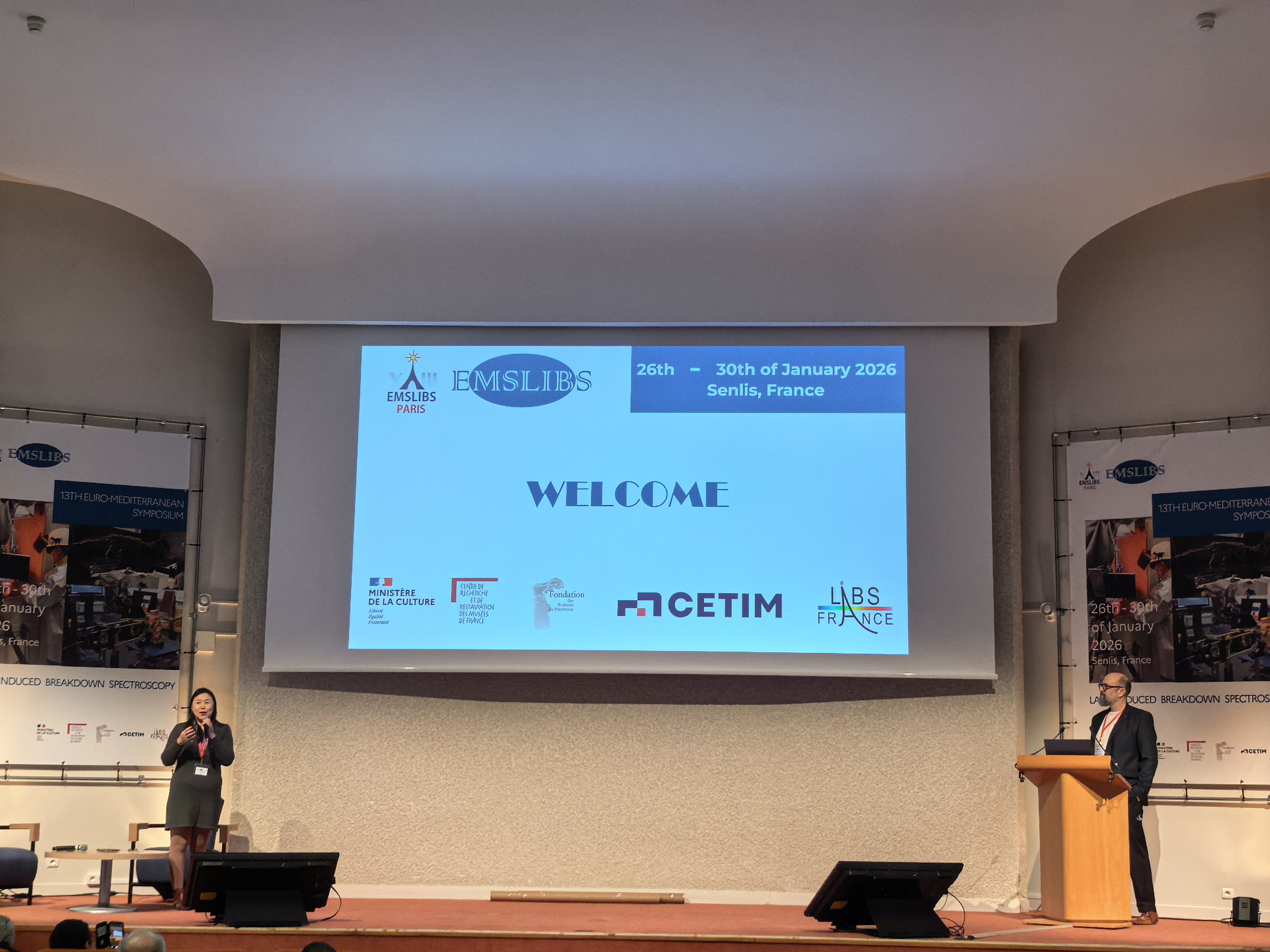
La 13ᵉ édition de l’Euro-Mediterranean Symposium on Laser-Induced Breakdown Spectroscopy (EMSLIBS 2026), organisée du 26 au 30 janvier 2026 à Senlis, a réuni près de 150 chercheurs, ingénieurs et acteurs industriels venus d’Europe et d’autres continents.
Portée par la communauté française - Centre de recherche et de restauration des musées de France (C2RMF), Fondation des Sciences du Patrimoine (FSP), Centre technique des industries mécaniques (CETIM), et Réseau LIBS France - cette édition a confirmé la position d’EMSLIBS comme conférence internationale de référence dédiée au développement scientifique, technologique et applicatif de la spectroscopie LIBS.
Le patrimoine culturel, un axe structurant et stratégique
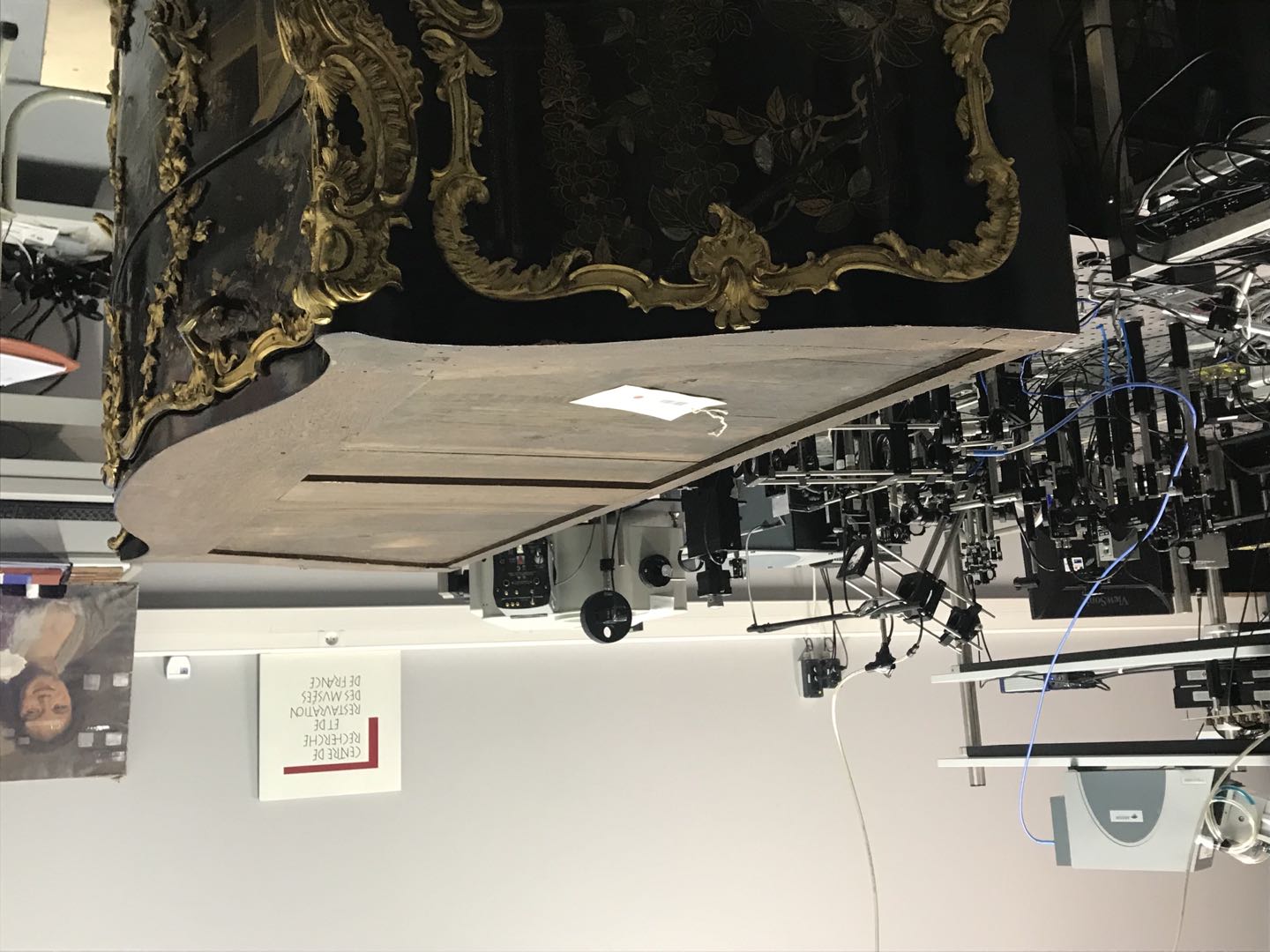
EMSLIBS 2026 a marqué une étape importante dans le renforcement des applications en sciences du patrimoine.
Deux conférences plénières ont été consacrées à ce domaine, soulignant :
- les défis analytiques spécifiques à l’Heritage Science,
- les besoins en instrumentation portable et micro-invasive,
- la caractérisation locale et à distance des matériaux patrimoniaux.
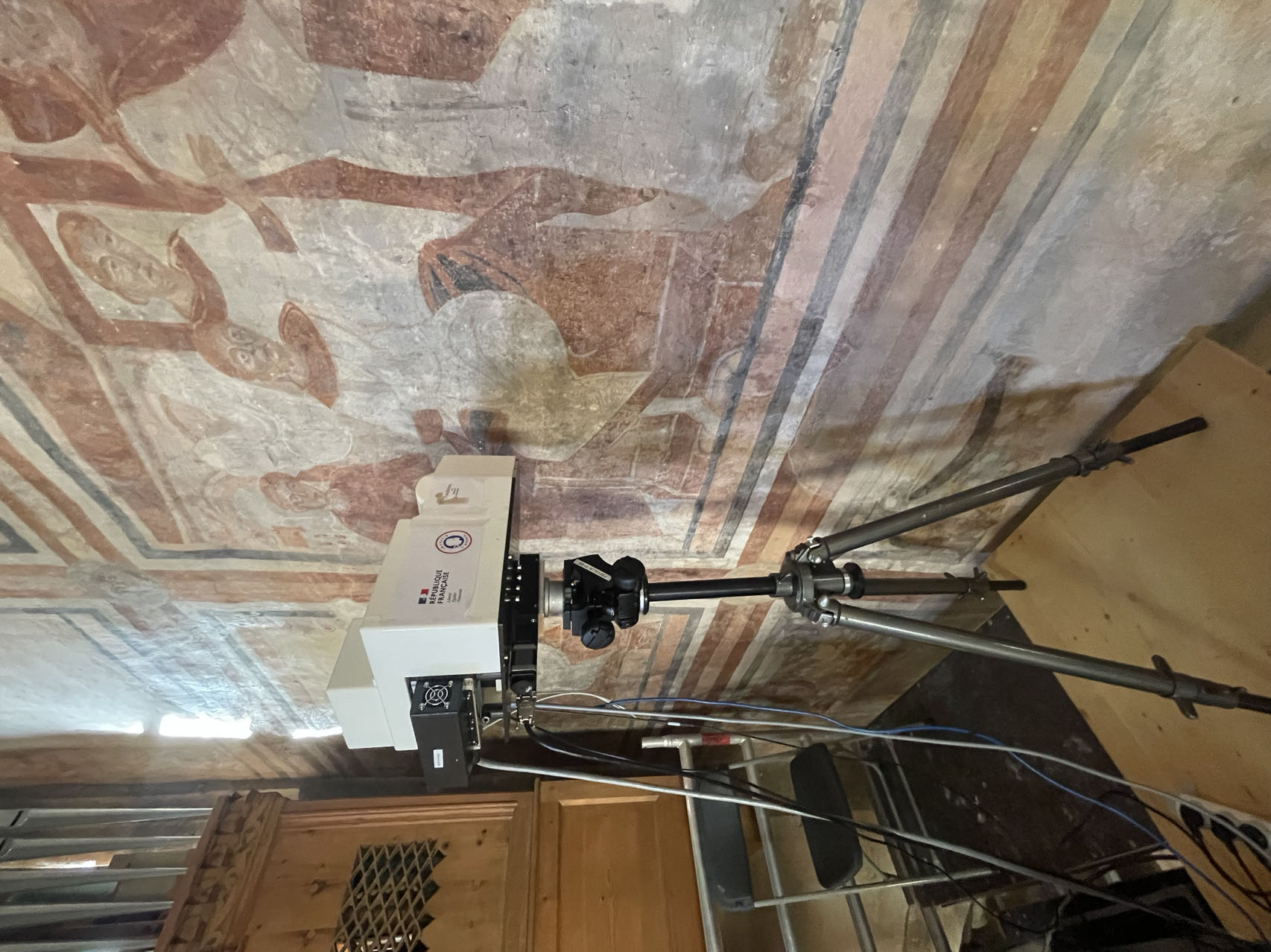
Une session dédiée a illustré des applications concrètes : µ-LIBS quantitative pour l’étude de céramiques archéologiques, conservation d’alliages d’aluminium historiques, fusion entre imagerie LIBS et isotopie C&O pour l’analyse de carbonates, ainsi que développement d’outils adaptés aux conservateurs-restaurateurs.
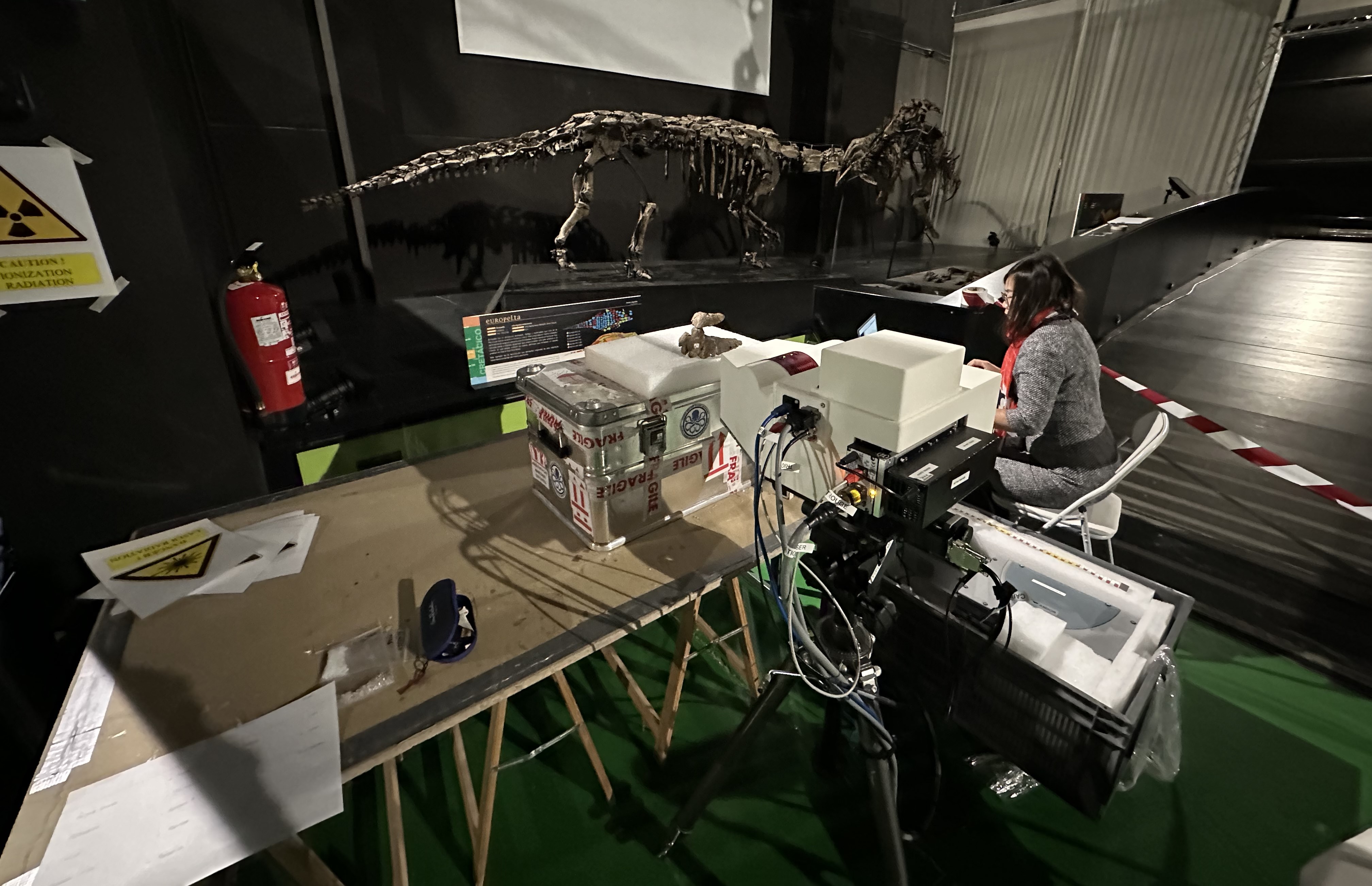
Ces contributions ont confirmé le fort potentiel de la LIBS comme technique d’analyse in situ, compatible avec les contraintes muséales et archéologiques, capable de cartographier altérations, restaurations et hétérogénéités de matériaux complexes.
Le comité d’organisation souhaite amplifier cet axe Patrimoine lors des prochaines éditions, en renforçant les collaborations interdisciplinaires et le développement d’approches multimodales dédiées.
Une technologie en pleine maturité
EMSLIBS 2026 a démontré que la LIBS a franchi une étape décisive : elle s’impose désormais comme une technologie analytique mature et intégrée.
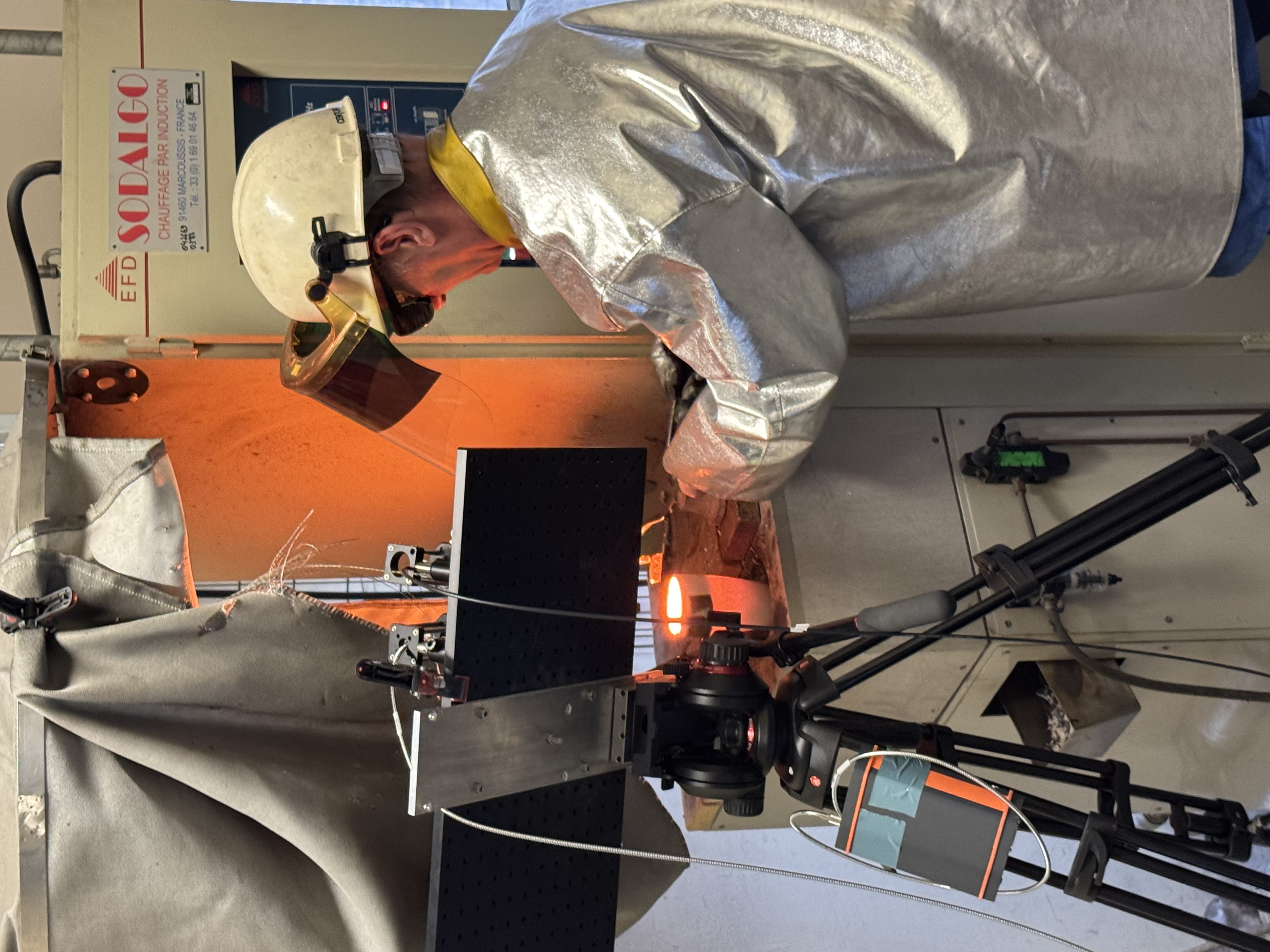
Son déploiement industriel s’accélère, avec des applications en contrôle en ligne de procédés métallurgiques, analyse de métaux en fusion, suivi de flottation minière ou contrôle de procédés polymères. La LIBS répond aujourd’hui aux exigences de rapidité, robustesse et traçabilité de l’industrie contemporaine.
Les avancées méthodologiques - notamment en Calibration-Free LIBS et en imagerie haute résolution - renforcent ses capacités quantitatives et sa précision sur des matériaux complexes.
L’intégration croissante de la chimométrie et de l’intelligence artificielle permet l’exploitation efficace de grands jeux de données et la structuration de bases harmonisées.
Enfin, son extension vers des environnements exigeants - applications spatiales, sous-marines, systèmes embarqués - témoigne de la robustesse et de la flexibilité de la technique. Les approches multimodales élargissent encore son champ d’application.
La LIBS s’affirme ainsi comme une plateforme technologique stratégique, à l’interface entre physique du plasma, instrumentation avancée et science des données.
Temps forts
- Keynotes internationaux (industrie, patrimoine, modélisation, applications en ligne et in situ)
- Data Challenge consacré à la classification des données LIBS
- Session d'hommage à Vincent Detalle, soulignant sa contribution majeure à la communauté internationale
- Présentation scientifique par des sponsors mettant en évidence la forte interaction entre la recherche académique et l’industrie instrumentale
- Programme social et gala à Paris, favorisant les échanges et les collaborations
Publication - Special Issue EMSLIBS 2026
Les travaux sélectionnés feront l’objet d’un numéro spécial “EMSLIBS 2026” dans la revue Spectrochimica Acta Part B: Atomic Spectroscopy, réservé aux participants du symposium.
Ce numéro reflétera les principaux axes scientifiques de cette édition, avec une attention particulière portée aux avancées méthodologiques et aux applications innovantes, notamment en sciences du patrimoine.
Une dynamique tournée vers l'avenir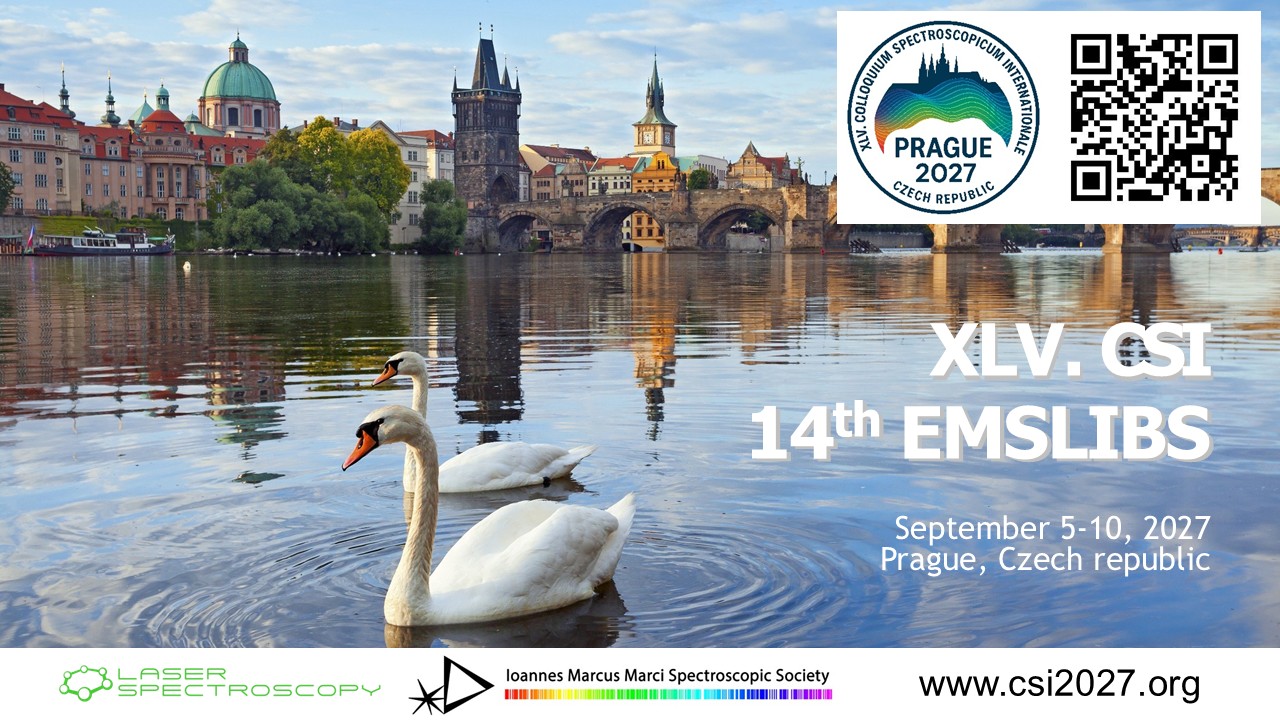
EMSLIBS 2026 a confirmé le dynamisme et la cohésion d’une communauté internationale en pleine évolution.
La conférence s’est clôturée par le passage de relais vers EMSLIBS 2027 à Prague, où le développement des applications industrielles, multimodales et patrimoniales se poursuivra.
EMSLIBS évolue : plus intégrée, plus collaborative, plus stratégique et résolument engagée au service des sciences, de l’industrie et du patrimoine.
ENGLISH VERSION
The 13th edition of the Euro-Mediterranean Symposium on Laser-Induced Breakdown Spectroscopy (EMSLIBS 2026), held from January 26–30, 2026 in Senlis, brought together nearly 150 researchers, engineers, and industrial stakeholders from across Europe and beyond.
Organized by the French community - Centre de recherche et de restauration des musées de France (C2RMF), Fondation des Sciences du Patrimoine (FSP), Centre technique des industries mécaniques (CETIM), and the LIBS France Network - this edition confirmed EMSLIBS as a leading international conference dedicated to scientific, technological, and applied advances in LIBS.
Culture Heritage - A strategic and Structuring Focus
EMSLIBS 2026 marked a significant step forward in strengthening LIBS applications in Heritage Science.
Two keynote lectures were dedicated to this field, highlighting:
- analytical challenges specific to Heritage Science,
- the need for portable and micro-invasive instrumentation,
- local and remote characterization of heritage materials.
A dedicated session showcased concrete applications, including quantitative µ-LIBS for archaeological ceramics, conservation of historical aluminum alloys, integration of LIBS imaging with C and O isotopic analysis for carbonate studies, and the development of tailored tools for conservators and restorers.
These contributions confirmed the strong potential of LIBS as an in situ analytical technique compatible with museum and archaeological constraints, capable of mapping alterations, restorations, and heterogeneities in complex materials.
The organizing committee aims to further strengthen this Heritage focus in future editions by promoting interdisciplinary collaborations and developing dedicated multimodal approaches.
A Technology Reaching Full Maturity
EMSLIBS 2026 demonstrated that LIBS has reached a decisive stage: it is now established as a mature and integrated analytical technology.
Industrial deployment is accelerating, with applications including inline metallurgical monitoring, molten metal analysis, mining flotation control, and polymer process supervision. LIBS now meets the requirements of speed, robustness, and traceability demanded by modern industry.
Advances in Calibration-Free LIBS and high-resolution imaging enhance quantitative capabilities and analytical precision for complex materials.
The growing integration of chemometrics and artificial intelligence enables efficient exploitation of large datasets and the structuring of harmonized databases.
Its expansion into demanding environments - space, underwater, and embedded systems - demonstrates robustness and flexibility, while multimodal approaches further broaden its application scope.
LIBS is thus emerging as a strategic technological platform at the intersection of plasma physics, advanced instrumentation, and data science.
Highlights
- International keynotes (industry, heritage, modeling, online and in situ applications).
- Data Challenge dedicated to LIBS data classification.
- Tribute session to Vincent Detalle, highlighting his major contribution to the international community.
- Scientific presentation by sponsors highlighting the strong interaction between academic research and the instrument industry.
- Social program and gala in Paris, promoting exchanges and collaborations.
Publication - EMSLIBS 2026 Special Issue
Selected contributions will be published in a dedicated Special Issue entitled “EMSLIBS 2026” in Spectrochimica Acta Part B: Atomic Spectroscopy, reserved for symposium participants.
The issue will reflect the main scientific themes of this edition, with particular attention to methodological advances and innovative applications, especially in Heritage Science.
A Community Moving Foward
EMSLIBS 2026 confirmed the dynamism and cohesion of a rapidly evolving international community.
The conference concluded with the handover to EMSLIBS 2027 in Prague, where the development of industrial, multimodal, and heritage applications will continue.
EMSLIBS is evolving :
more integrated, more collaborative, more strategic - and firmly committed to serving science, industry, and cultural heritage.
À découvrir
Le plan de sauvegarde des biens culturels

Département Conservation préventive

Département Archives et Bibliothèque
